
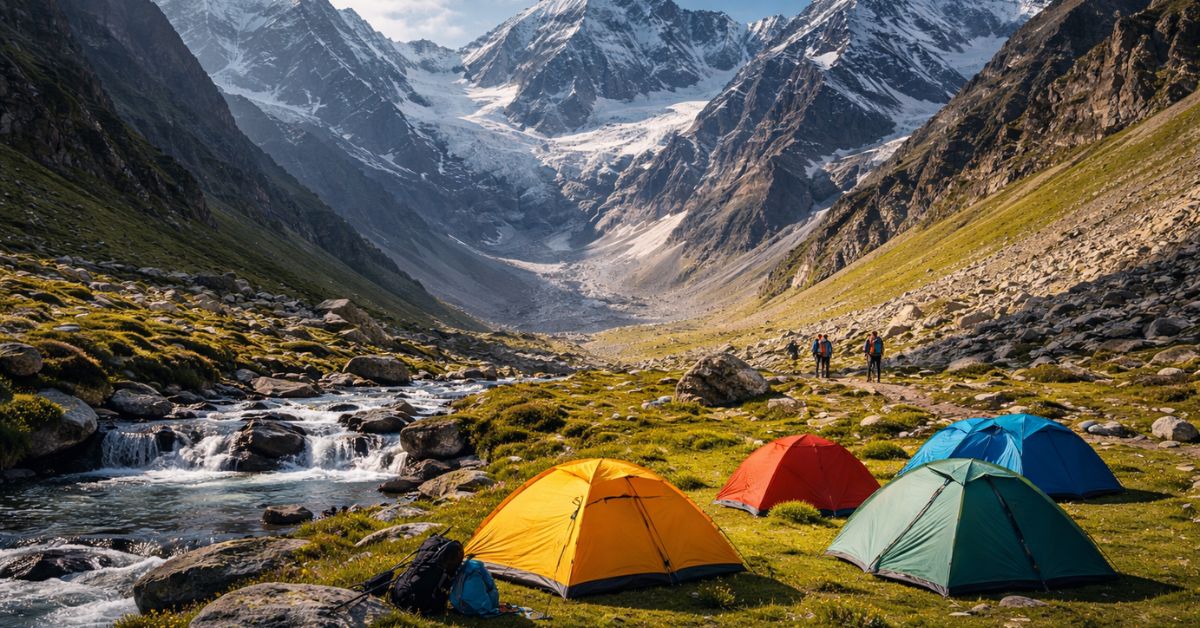
The Kugti Pass Trek is one of Himachal Pradesh’s most breathtaking and rewarding adventures. It cuts through the ancient Chamba valley, revealing raw Himalayan beauty at every step. Few treks in India combine solitude, wildlife, and high-altitude drama so perfectly. This is not a commercialised trail packed with tourist crowds. It is a genuine wilderness experience for those who seek something real. If you are looking for an offbeat trek in Himachal Pradesh, Kugti Pass is your answer. This comprehensive trekking guide covers everything you need to plan your journey. From routes and permits to costs and camping tips, we have it all here.
What Is the Kugti Pass Trek?
The Kugti Pass Trek is a high-altitude Himalayan trekking route in the Chamba district. It connects the remote Kugti village with the Lahaul valley via a dramatic mountain pass. The pass sits at an altitude of approximately 5,190 metres (17,027 feet) above sea level. This trek passes through the protected Kugti Wildlife Sanctuary, home to rare species. Snow leopards, Himalayan brown bears, and blue sheep roam these magnificent slopes freely. The trail winds through alpine meadows, glacial moraines, and dense conifer forests. It is one of the most scenic hidden treks in Himachal Pradesh you will ever attempt.
Read More: Pin Parvati Trek Guide
Kugti Pass Trek – Key Facts at a Glance
Here are some facts and quick information about the trek. Please have a look:
| Detail | Information |
| Location | Chamba District, Himachal Pradesh, India |
| Maximum Altitude | 5,190 m (17,027 ft) |
| Trek Distance | ~52 km (round trip) |
| Duration | 6-7 days |
| Difficulty Level | Difficult |
| Base Village | Kugti Village, Bharmour |
| Best Time to Visit | June to September |
| Permit Required | Yes, Wildlife Sanctuary Permit |
Kugti Pass Trek Difficulty Level
The Kugti Pass Trek difficulty level is rated Difficult by most experienced trekking guides. This rating is not meant to scare you; it is meant to prepare you properly. The trail involves steep ascents, snow crossings, and challenging high-altitude terrain. You will gain significant elevation over short distances on multiple days. The glacier section near the pass demands careful footwork and reliable trekking gear. Prior experience with high-altitude Himalayan trekking routes is strongly recommended. Beginners should complete at least two moderate-level treks before attempting this one. Physical fitness and mental resilience are equally important on this trail.
Kugti Pass Trek Best Time to Visit
The Kugti Pass Trek best time to visit is between June and mid-September. Snow clears from the pass by early June, opening the trail for trekkers. The meadows bloom with wildflowers during July and August, truly spectacular. Monsoon does bring some rainfall to the region between July and August. However, the Chamba valley receives far less rain than other Himalayan zones. September offers crystal-clear skies and the most stable weather of the season. October onwards, snowfall begins to block the pass, making it inaccessible. Never attempt this Kugti Pass snow trek outside the June-to-September window.
Kugti Pass Trek Route Map and Itinerary
Here is the standard Kugti Pass Trek itinerary starting from Bharmour:
Day 1: Bharmour to Kugti Village (3–4 hours)
Your Kugti Pass trek from Bharmour begins with a scenic drive to Kugti village. The village sits at around 2,380 metres and is a beautiful starting point. Explore the ancient Kugti temples and acclimatise to the altitude overnight. The locals here are warm, hospitable, and deeply connected to the mountains.
Day 2: Kugti Village to Nai Tibba (6–7 hours)
The trail climbs steeply from the village through dense deodar and pine forests. You will cross several streams fed by glacial meltwater along the way. Nai Tibba campsite sits in an open meadow at approximately 3,700 metres. Camp here under a vast, star-filled Himalayan sky.
Day 3: Nai Tibba to Kugti Pass Base Camp (5–6 hours)
Today’s section is where trekking in the Chamba valley truly comes alive visually. The landscape transitions from green meadows to rocky, glaciated terrain beautifully. You begin seeing permanent snow patches and distant peaks with sharp clarity. Base camp sits below the pass at around 4,600 metres. Rest well, tomorrow is the most demanding day of the trek.
Day 4: Base Camp to Kugti Pass and Descent (8–9 hours)
This is the summit day of your Kugti Pass trekking route. You start early, well before sunrise, to cross the pass safely. The final climb to 5,190 metres is steep, snowy, and absolutely exhilarating. Views from the top stretch across Lahaul, Spiti, and countless Himalayan peaks. Descend into the Lahaul side carefully and camp at a lower meadow.
Day 5: Descent and Return (4–5 hours)
The return journey allows you to see the trail from a new perspective entirely. Many trekkers spot Himalayan wildlife on the descent back toward Kugti village. You will feel the altitude easing as you move back into the forested lower sections.
Day 6–7: Buffer Day and Return to Bharmour
Always carry a buffer day when trekking in high-altitude Himalayan terrain. The weather can change quickly at 5,000+ metres without any warning. Use the buffer day wisely, rest, explore Kugti village, or simply absorb the mountains.
How to get the Kugti Pass Trek Permit?
The Kugti Pass trek permit is mandatory for all trekkers entering the wildlife sanctuary. You must obtain this permit from the Forest Department office in Bharmour before starting. Carry a valid photo ID and several passport-sized photographs for the process. The permit process is straightforward and usually completed within a few hours. Do not attempt the trek without a proper permit; it is both illegal and irresponsible. Respecting protected zones ensures the survival of the incredible wildlife in this region.
How Much is the Kugti Pass Trek Cost?
The Kugti Pass Trek cost depends on whether you go independently or with a package. A guided Kugti Pass trekking package typically ranges from ₹12,000 to ₹20,000 per person. This usually includes accommodation, meals, guide fees, permits, and camping equipment. Independent trekkers can complete the trek for ₹6,000–₹9,000 all-inclusive. Factor in transport from Delhi or Chandigarh to Bharmour in your total budget. Local guides from Kugti village are affordable, knowledgeable, and deeply familiar with the terrain.
Also Read: Kareri Lake Trek: Complete Guide
Essential Kugti Pass Trekking Tips
Follow these Kugti Pass trekking tips for a safe and rewarding experience:
- Acclimatise properly: Spend at least one night in Bharmour before starting the trek.
- Start early each day: High-altitude weather deteriorates quickly after noon.
- Carry microspikes or crampons: The glacier section near the pass can be icy.
- Stay hydrated: Drink at least 3-4 litres of water daily on the trail.
- Carry a first-aid kit: Include altitude sickness medication like Diamox.
- Pack light but smart: Every extra kilo will punish you above 4,500 metres.
- Respect the wildlife sanctuary rules: No littering, no noise, no open fires.
- Hire a local guide: Kugti village guides are excellent and support the local economy.
What Makes the Kugti Pass Trek Truly Special?
Among all adventure trekking destinations in India, Kugti Pass stands in a class of its own. The trail sees very few trekkers compared to popular routes like Hampta Pass or Pin Parvati. You will often spend entire days without seeing another trekking group ahead. The wildlife sanctuary status means the ecosystem here is genuinely pristine and protected. The cultural richness of Bharmour and Kugti village adds a rare human dimension. Ancient temples, traditional Gaddi shepherd communities, and living Himalayan culture surround you. This is what offbeat trekking in Himachal Pradesh is supposed to feel like. Raw, humbling, and deeply unforgettable.
Final Thoughts
The Kugti Pass Trek is not for the faint-hearted, and that is precisely its charm. It demands preparation, respect, and a genuine love for the mountains. In return, it offers something no popular trail can replicate: absolute solitude in one of India’s most dramatic landscapes. Whether you are drawn by the wildlife, the glacier crossings, or the silence of the Himalayas, Kugti Pass will deliver everything and more. Plan your Kugti Pass trekking route carefully, respect the land, and go with an open heart. The mountains will do the rest.
Frequently Asked Questions
What is the altitude of the Kugti Pass Trek?
The Kugti Pass sits at an altitude of approximately 5,190 metres (17,027 feet) above sea level. It is one of the highest trekking passes in the Chamba district of Himachal Pradesh. Proper acclimatisation before the trek is strongly advised. Spend at least one night in Bharmour before beginning your ascent. This significantly reduces the risk of altitude sickness on the trail.
What is the best time to visit the Kugti Pass Trek?
The best time for the Kugti Pass Trek is between June and mid-September. Snow melts from the pass by early June, making the trail accessible for trekkers. July and August bring lush meadows and vibrant wildflowers across the route. September offers the clearest skies and most stable weather of the season. Avoid trekking after October, as heavy snowfall blocks the pass completely.
Is the Kugti Pass Trek suitable for beginners?
The Kugti Pass Trek is rated difficult and is not recommended for complete beginners. It involves steep climbs, glacier crossings, and sustained high-altitude trekking over several days. You should have prior experience on at least two moderate Himalayan treks. Strong physical fitness and mental endurance are essential for completing this route safely. First-timers should train consistently for at least two to three months beforehand.
Do I need a permit for the Kugti Pass Trek?
Yes, a permit is mandatory to trek through the Kugti Wildlife Sanctuary. You can obtain this permit from the Forest Department office located in Bharmour town. Carry a valid government-issued photo ID and passport-sized photographs for the application. The permit process is simple and is usually completed within a few hours. Trekking without a permit is illegal and harmful to the protected sanctuary ecosystem.
How much does the Kugti Pass Trek cost?
The cost of the Kugti Pass Trek depends on your style of travel and planning. A fully guided trekking package typically costs between ₹12,000 and ₹20,000 per person. This usually covers meals, camping gear, permits, guide fees, and accommodation. Independent trekkers can complete the trek for approximately ₹6,000 to ₹9,000 total. Always budget separately for transport from Delhi or Chandigarh to Bharmour.
What essential gear should I carry for the Kugti Pass Trek?
Packing the right gear is critical for a safe Kugti Pass trekking experience. Carry warm layered clothing, a high-quality sleeping bag, and waterproof trekking boots. Microspikes or crampons are essential for the icy glacier section near the pass. A first-aid kit with Diamox for altitude sickness is strongly recommended. Other must-haves include trekking poles, a rain cover, a headlamp, and at least three to four litres of water capacity.
