
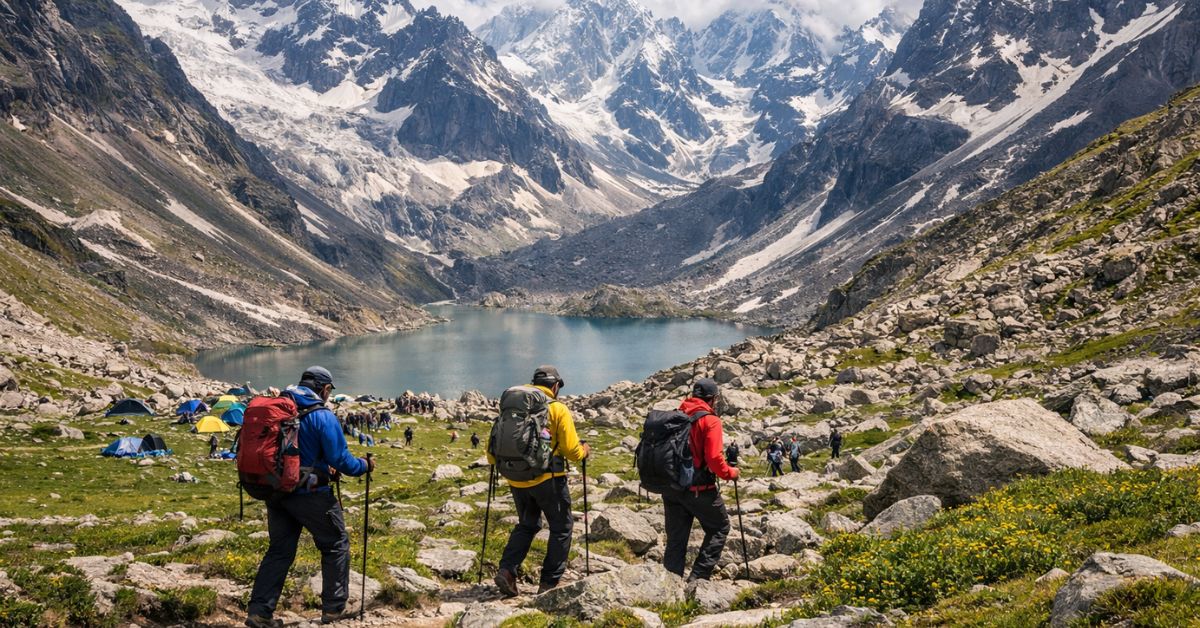
Beas Kund Trek is the best trek to do apart from Rohtang Pass or Solang Valley if you are planning a trip to Manali. This is one of those treks that offers you a glacial lake, snow-capped peaks, alpine meadows and the real wilderness of the Himalayas all in a short distance from Manali. And the best part? It doesn’t require much experience as a mountaineer.
Here is the complete Beas Kund Trek Guide for 2026, which includes all information, including distance, best time to visit, weather, route, temperatures, packing list, permit and more. For first-timers or for those who have already visited Himachal Pradesh, this is useful for planning your visit.
What Is Beas Kund And Why Is It Special?
Beas Kund is a high altitude glacial lake located at an altitude of about 3700 metres (12140 feet) above sea level in the Kullu district in Himachal Pradesh. The lake has great mythological importance as it is the place where Sage Vyas (also called as Beas) was meditating and most importantly, it is the place where the Beas River originates, which flows through Manali and Kullu all the way down to Punjab.
One thing that makes the Beas Kund trek different from the many short treks in Himachal is the variety of landscapes that one comes across. The route starts in dense pine and birch forests, goes through open alpine meadows at Dhundi and Bakarthach and leads to a tranquil glacial lake, surrounded by three majestic peaks: Hanuman Tibba (5982 m), Shitidhar (4951 m) and Seven Sisters. On a clear day, the view from the lake is absolutely breathtaking.
Beas Kund Trek At A Glance
Here is a quick table providing all the information related to the trek. We have covered all the important points in this table for your quick look.
| Detail | Information |
| Trek Type | Out and Back |
| Difficulty | Easy to Moderate |
| Maximum Altitude | ~3,700 m (12,140 ft) |
| Beas Kund Trek Distance | ~26 km (round trip) |
| Beas Kund Trek Distance from Dhundi | ~13 km (one way) |
| Beas Kund Trek Distance from Manali | ~14 km by road to Dhundi + 13 km trek |
| Duration | 2 to 3 Days (can be done in 1 day for fit trekkers) |
| Starting Point | Dhundi Village |
| Best Time to Visit | May to October |
| Trek Season 2026 | May – October |
Beas Kund Trek Starting Point: Where Does The Trek Begin?
Dhundi village, near 14 km from Manali town, is the starting point of the Beas Kund trek. Dhundi is located just outside of the famous Solang Valley and is road accessible. The majority of the trekkers hire a cab or shared taxi from Manali to Dhundi, which costs approximately ₹300 to ₹600 per cab based on the season and type of vehicle.
From Delhi, the ride to Dhundi would be:
- Delhi to Manali: Approximately 540 km, either by Volvo overnight bus (12–14 hours) or by private car/cab
- Manali to Dhundi: 14 km by road (30–45 minutes)
Hence, if you are planning the trek to Beas Kund from Delhi, be prepared to go on a night journey and begin the trek the next morning. Many trekkers board the bus from the Kashmiri Gate ISBT or Majnu Ka Tila on Friday night and arrive at Manali on Saturday morning, and then have the whole weekend for the trek.
Beas Kund Trek Distance: How Far Do You Actually Walk?
Now here is the distance breakdown with which you can plan your legs accordingly:
- Dhundi to Bakarthach (Campsite): ~6–7 km | Ascent of about 500 m | 3 to 4 hours
- Bakarthach to Beas Kund: ~6 km | Ascent of about 400 m | 2.5 to 3 hours
- Return from Beas Kund to Dhundi: ~13 km | 4 to 5 hours
The trek to Total Beas Kund is about 26 km round trip. The trail is, for the most part, clearly marked, and no technical climbing aids are needed.
Beas Kund Trek In 1 Day: Is It Possible?
Yes, the Beas Kund trek 1 day is possible for physically fit trekkers who are already acclimatised to the altitude. This means that at least one night in Manali (2050 m) is recommended before a single-day summit.
For a successful one-day attempt:
- Start from Dhundi by 6:00 AM at the latest
- Carry at least 2–3 litres of water and a packed lunch
- Move at a steady, comfortable pace
- Reach Beas Kund by 12:00 PM – 1:00 PM
- Begin your descent by 1:30 PM and aim to be back at Dhundi by 5:30–6:00 PM
Start your journey by 1:30 PM and get back to Dhundi by 5:30 – 6:00 PM.
Very long and hard day with 26 km and 900 m of up/down. It is recommended to do it in 2 days with an overnight camp staying at Bakarthach, where it would be a much more enjoyable experience. The sky littered with stars and Hanuman Tibba right in front of you, while you camp at Bakarthach meadow, is worth every rupee of yours.
Beas Kund Trek Map And Route Description
While there is no official printable map of the Beas Kund trek, it is well-marked and relatively easy to follow. Here is a text description of the trail:
Dhundi → Bakarthach (Day 1)
The path starts from Dhundi with a moderate-graded climb, passing through lush forests. You then cross a further stream, and then the way opens out into a wide valley. The ride in the beginning is mostly along the left bank of the Beas River. The wide open campsite Bakarthach (3350m) is situated at the end of the pleasant walk (6-7km) through meadows and moraines with good views over the surrounding peaks.
Bakarthach → Beas Kund (Day 2 – Morning)
From Bakarthach, the path heads up rockier and steeper. A small glacier part is crossed (in initial months it may be snow-covered), and after about 2.5 – 3 hours of constant upslope, the Beas Kund lake is visible, which is fed by glaciers of Hanuman Tibba. The water is a greenish blue – icy in colour – and the whole area is pure and sacred.
Return to Dhundi (Day 2 – Afternoon)
The return is done in the same manner. If you have camped at Bakarthach, you do the packing and go down to Dhundi till the afternoon.
Beas Kund Trek Best Time To Visit
One of the most common questions is about the Beas Kund trek best time to visit. Here is a month-by-month breakdown:
Beas Kund Trek in May
If you are planning for the Beas Kund trek in May then you have selected the best time. The trail is freshly opened after winter, and large patches of snow remain on the upper sections near the lake. Temperatures also remain pleasant during the day. However, nights can be very cold (dropping to -5°C at Bakarthach), so pack accordingly. The trek feels adventurous with snow crossings and clear skies.
Here is an expert tip from our side: carry microspikes or yaktrax if you plan to trek in early May.
Beas Kund Trek In June
The Beas Kund trek in June is also considered the perfect time. In June, most of the snow has melted, wildflowers are blooming across the meadows, the trail is clear, and the lake is fully accessible. Days are long, skies are blue, and the overall conditions are ideal. Pre-monsoon temperatures are comfortable, expect 10–18°C during the day at the lake.
Beas Kund Trek July And August
Although this area is not as much in the rain shadow zone as other parts of the Himalayas, there may be periods of rain and slippery trails during the monsoon. Unless you are comfortable with wet conditions, not the recommended time.
Beas Kund Trek September And October
Post-monsoon is excellent. September is a month of clear, stable skies and the whole landscape turns golden. October is the final opportunity before the trail is closed by snow. October has clear views but a dramatic decrease in temperatures, particularly at night.
Beas Kund Trek In December
The Beas Kund trek in December is not recommended for most trekkers. The trail is completely covered with snow by December, with the higher elevations around the lake requiring winter mountaineering skills and equipment. Dhundi is snow-clad, and temperatures can drop below -15°C. It is only for experienced winter trekkers with the appropriate gear in December.
Beas Kund Trek Temperature And Weather
Understanding the Beas Kund trek temperature and the Beas Kund trek weather helps you pack correctly:
| Month | Day Temp (at Beas Kund) | Night Temp (at Bakarthach) | Conditions |
| May | 5°C to 12°C | -5°C to 0°C | Snowy patches, clear skies |
| June | 10°C to 18°C | 2°C to 8°C | Best weather, blooming flowers |
| July–August | 10°C to 15°C | 5°C to 10°C | Possible rain, slippery trail |
| September | 8°C to 14°C | 0°C to 5°C | Clear, stable, golden meadows |
| October | 2°C to 10°C | -5°C to 0°C | Cold but clear, last window |
| December | -10°C to -2°C | -15°C to -8°C | Not recommended |
The Beas Kund trek weather is generally dry and pleasant during May, June, and September-October. Always check local forecasts before starting the trek, as mountain weather can change quickly.
Permits And Formalities For Beas Kund Trek In 2026
From 2026, trekkers will be required to register at a Forest Check Post at Dhundi before embarking on the trek. Have a photo ID card (Aadhaar card is acceptable) issued by the government. The fee for the forest is very small, approximately ₹50–₹100 per person. Bakarthach camp charges can be collected by local shepherds or local caretakers. This trek does not need any Inner Line permit.
What To Pack For The Beas Kund Trek
Here is a practical packing list for a 2-day Beas Kund trek:
Clothing:
- Thermal base layers (top and bottom)
- Fleece jacket or warm mid-layer
- Waterproof windcheater or rain jacket
- Trekking pants (quick-dry)
- Warm socks (2–3 pairs), trekking gloves, woollen cap
Gear:
- Trekking poles (very helpful on rocky terrain near the lake)
- Headlamp with spare batteries
- Sleeping bag rated to -10°C (if camping)
- Trekking boots with ankle support (not sneakers)
Essentials:
- Water bottles or hydration bladder (minimum 2 litres)
- Sunscreen (SPF 50+), sunglasses, lip balm
- Basic first-aid kit and personal medicines
- High-energy snacks, dry fruits, energy bars, and chocolate
- Packed meals or a gas stove with instant noodles or oats for camping
Where To Stay Near Beas Kund Trek
- In Manali: Budget guesthouses, hostels, and hotels are available for all budgets along Old Manali Road, Mall Road, and the Vashisht area. Expect to pay ₹600–₹2,500 per night, depending on your preference.
- On the Trek: Camping is the primary option. You can carry your own tent or hire camping gear from Manali. Some local outfitters in Manali offer complete camping packages including a tent, a sleeping bag, and a guide.
- Bakarthach Campsite: This is the main overnight stop. It is an open meadow, and in peak season, you will find other groups camping here. There are no permanent tea stalls or facilities, so carry all your food and water.
Tips For A Safe And Enjoyable Trek
- Get acclimatised: It is advised to stay in Manali for a full day before beginning the trek. Take a walk to the Vashisht or Hadimba Temple area.
- An early start is important: Mountain weather can change in the afternoon. Depart for your walk at 6-7 AM.
- Drink plenty of fluids: The altitude and activity can cause dehydration before you are aware of it.
- Never throw anything in the lake: Beas Kund is a clean lake. Pack out all rubbish.
- If you are not sure, hire a local guide: A local guide can greatly enhance and provide safety to your experience. The cost of guides in Manali is approximately ₹800-₹1,500 per day.
- Cellphone charging: As there is no mobile network beyond Dhundi, download maps offline (use Gaia GPS or Maps.me, with the Beas Kund trek route).
Final Thoughts
Beas Kund Trek is indeed one of the best short treks in the entire Himalayan range. It provides authentic mountain action, without a week-long vacation from work or life. With the glacial source lake, the three majestic peaks in the background and the colourful alpine meadows, it is a trek to remember long after you have made your way down to Manali.
Beas Kund is a place that is rewarding for any kind of trekker, whether it’s May when snowy sceneries are at their peak or June when wildflowers are in full bloom or October when the crispness of the season adds a layer of clarity. Just be well-prepared, pack efficiently, be considerate of the environment, and the mountains will do the rest.
Happy trekking in 2026!
Before embarking on any trek in the Himalayas, it is important always to consider the current trail conditions and any local advisories. Conditions on the mountain can change quickly.
